
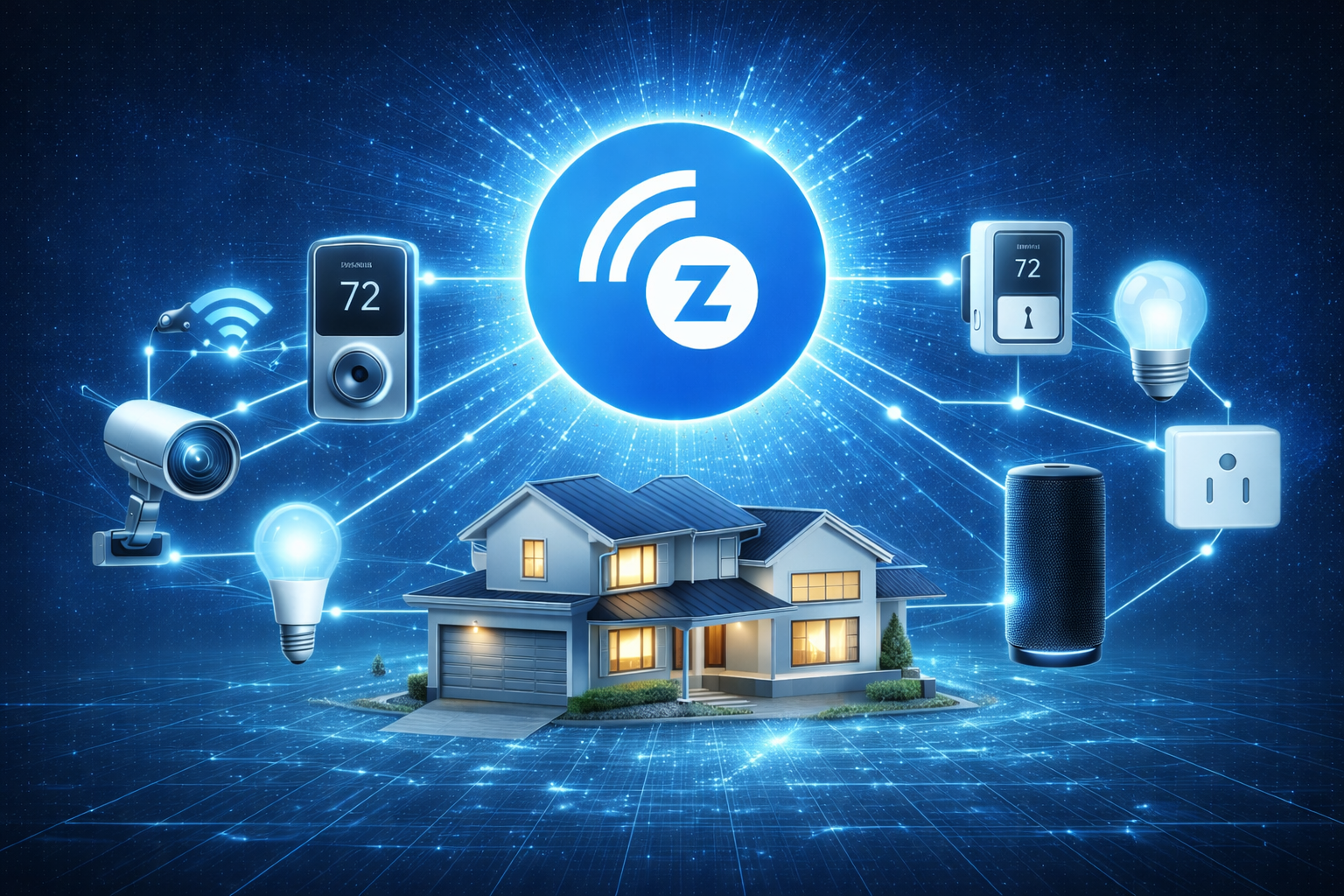
Introduction to Z-Wave Technology
Z-Wave technology has emerged as a cornerstone in the realm of smart home automation, offering a robust and reliable framework for connecting various devices within a home. Originally developed in 1999 by a Danish company, Zensys, Z-Wave was designed to meet the growing demand for wireless communication in home automation. Unlike many other protocols, Z-Wave operates on a sub-gigahertz frequency, specifically around 908.42 MHz in the U.S., which helps minimize interference from common household devices like Wi-Fi routers and Bluetooth gadgets. This feature alone underscores its relevance in creating a seamless smart home experience.
Z-Wave’s primary appeal is its interoperability, allowing smart devices from different manufacturers to communicate seamlessly. This is essential in a landscape where consumers often mix and match products from various brands to suit their unique needs. Without interoperability, a smart home would be a fragmented array of incompatible devices, each requiring separate management systems. Z-Wave’s standardized protocol ensures that certified devices can integrate smoothly, simplifying the setup process and enhancing user experience.
The history of Z-Wave is marked by significant milestones, including the formation of the Z-Wave Alliance in 2005—a consortium of companies committed to promoting and developing the technology. Today, with over 3,000 certified devices and more than 100 million products worldwide, Z-Wave has established itself as a leading technology in smart home ecosystems. Its growth is a testament to its adaptability and reliability, meeting the evolving demands of modern households by providing a stable and secure communication network.
How Z-Wave Works
At the core of Z-Wave technology is its protocol, which facilitates communication between smart home devices using low-energy radio waves. This protocol is designed to work within the ISM (Industrial, Scientific, and Medical) radio bands, offering a dedicated communication channel that reduces interference from other wireless technologies in the home. The Z-Wave protocol is structured to be lightweight, enabling devices to send and receive signals efficiently without consuming significant power.
Z-Wave’s networking capabilities are defined by its mesh network architecture. This design improves network range and reliability, ensuring data finds alternative routes if one path is disrupted. For example, if a signal from a light switch doesn’t reach a distant bulb directly, it can hop through other Z-Wave devices in the vicinity, ensuring the command is executed.
Additionally, Z-Wave networks can support up to 232 devices, making it scalable for both small apartments and large homes. The protocol also incorporates secure communication features, including AES-128 encryption, to protect data exchanges between devices, safeguarding against unauthorized access and ensuring user privacy. This combination of robust networking, low power consumption, and security makes Z-Wave a preferred choice for smart home automation, where reliability and efficiency are paramount.
Common Mistakes When Implementing Z-Wave
Implementing Z-Wave technology in smart homes can be a straightforward process, but there are common pitfalls that users should be aware of to ensure a smooth and efficient setup. One frequent mistake is not planning the network layout adequately. It’s crucial to consider the placement of Z-Wave nodes to optimize signal strength and ensure reliable communication across devices. Placing devices too far apart without sufficient repeaters can lead to connectivity issues.
Another common error is overlooking firmware updates for Z-Wave devices. Manufacturers regularly release updates to improve functionality and security. Regularly checking and updating firmware ensures that devices operate optimally and are protected against known vulnerabilities.
Some users also neglect the importance of securing their Z-Wave network. While Z-Wave offers robust security features like AES-128 encryption, it’s essential to set strong passwords and enable encryption settings during setup. This reduces the risk of unauthorized access and protects sensitive data from cyber threats.
Finally, users sometimes fail to verify device compatibility. Although Z-Wave is known for its interoperability, ensuring all devices are certified and compatible with your existing system is critical to a hassle-free experience. Checking compatibility before purchasing new devices can save time and prevent integration issues later on.
Advantages of Z-Wave Over Other Protocols
When comparing Z-Wave to other smart home protocols like Zigbee and Wi-Fi, its advantages become clear. One of the most significant benefits of Z-Wave is its low energy consumption. Devices using Z-Wave can operate on battery power for extended periods, often several months or even years, depending on usage. This efficiency is crucial for devices like sensors and locks that are intended to function continuously without frequent battery changes.
Z-Wave also boasts an impressive range. Its signals can reach up to 100 meters in open air, and this range can be extended through its mesh network capabilities. In contrast, Wi-Fi often struggles with range issues in larger homes due to obstacles like walls and furniture that can block signals. Zigbee, while offering a similar mesh network setup, can suffer from frequency interference as it operates in the crowded 2.4 GHz band, a common frequency for many household devices.
For instance, studies have shown that Z-Wave devices can operate on battery power for up to five years, significantly outlasting many Zigbee devices, which typically require more frequent battery changes due to higher energy consumption. Additionally, Z-Wave’s use of sub-gigahertz frequencies minimizes interference from common household devices such as microwaves and cordless phones, which often operate in the same frequency band as Zigbee’s 2.4 GHz.
In terms of cost, while initial setup costs for Z-Wave might be higher, the long-term savings on energy and maintenance often justify the investment. A detailed analysis by the Consumer Electronics Association found that homes equipped with Z-Wave technology can save up to 20% on energy bills annually compared to those using Wi-Fi-based smart home systems. These tangible benefits underscore Z-Wave’s superior efficiency and reliability in real-world applications.
Security and reliability are other areas where Z-Wave excels. The protocol’s use of AES-128 encryption ensures that communications within the network are secure, reducing the risk of hacking and unauthorized access. Moreover, the Z-Wave Alliance enforces strict certification processes for devices, ensuring that each one meets high standards for performance and interoperability. This level of oversight is not always present in protocols like Wi-Fi, which can vary significantly in quality and security depending on the device manufacturer.
In summary, Z-Wave’s low power requirements, extended range, and robust security features make it a compelling option for anyone looking to build a reliable and efficient smart home system. Its ability to seamlessly integrate with a wide array of devices from different manufacturers further underscores its position as a leader in the smart home technology space.
Smart Home Interoperability Challenges
Interoperability is one of the biggest challenges facing the smart home industry today. With a plethora of devices from various manufacturers, ensuring that these devices can communicate effectively with each other is crucial for creating a seamless smart home experience. However, common issues in device interoperability often arise due to differences in communication protocols, proprietary technologies, and lack of universal standards.
One of the primary issues is the fragmentation of protocols. Manufacturers often develop their own proprietary systems, which can lead to compatibility issues when users try to integrate devices from different brands. For instance, a smart thermostat from one company might not communicate with a smart lock from another due to differing protocols, resulting in a disjointed user experience. This lack of standardization can lead to consumer frustration, as users may need to rely on multiple apps or hubs to control their smart home devices.
The impact of these interoperability challenges on consumer experience is significant. When devices fail to work together, it can result in a cumbersome and inefficient smart home system. Users may experience difficulties in setting up and managing their devices, leading to dissatisfaction and potentially deterring them from further investments in smart home technology. Moreover, non-interoperable devices can compromise the overall functionality of a smart home, limiting automation possibilities and reducing convenience.
Z-Wave technology addresses these challenges by providing a standardized communication protocol that ensures interoperability across different devices and manufacturers. The Z-Wave Alliance, an organization of over 700 companies, plays a crucial role in maintaining this standardization by enforcing strict certification processes. This ensures that all certified Z-Wave devices can seamlessly communicate with each other, regardless of the brand. Additionally, Z-Wave’s robust mesh network architecture allows devices to relay signals through multiple nodes, minimizing connectivity issues and enhancing the reliability of the smart home system.
By prioritizing interoperability, Z-Wave not only enhances the consumer experience but also fosters innovation and collaboration among manufacturers. It allows consumers to mix and match devices from different brands without compromising functionality, ultimately leading to a more flexible and scalable smart home environment.
Z-Wave in Home Automation
The integration of Z-Wave technology in home automation has revolutionized the way we interact with our living spaces. Z-Wave provides a flexible and robust platform for integrating various smart home devices, enabling seamless communication and control. This integration extends to a wide range of devices, including lighting, security systems, thermostats, and entertainment systems, making it a versatile choice for comprehensive home automation.
Z-Wave-enabled products are abundant and diverse, offering consumers numerous options to enhance their smart home systems. For example, popular Z-Wave products include smart locks like the Schlage Connect, which allows users to remotely lock and unlock doors using a smartphone app. Similarly, the Fibaro Motion Sensor provides advanced motion detection capabilities, integrating with other devices to trigger actions such as turning on lights when movement is detected.
In practical user scenarios, Z-Wave’s capabilities shine through. Imagine returning home on a dark evening: as your car approaches the driveway, a motion sensor detects your presence, automatically turning on the porch lights. Simultaneously, the smart lock on your door disarms the security system and unlocks the door, welcoming you into a well-lit and secure home. Such scenarios exemplify the seamless automation potential facilitated by Z-Wave technology.
Moreover, Z-Wave’s compatibility with various smart home platforms and voice assistants like Amazon Alexa and Google Assistant further enhances user convenience. Homeowners can integrate Z-Wave devices into their existing ecosystems, allowing voice control over their entire smart home setup.
Overall, Z-Wave’s role in home automation is pivotal, providing a reliable, secure, and interoperable framework for managing diverse smart home devices. Its ability to support extensive device networks and ensure smooth inter-device communication makes it a preferred choice for homeowners seeking a comprehensive and user-friendly home automation solution.
Integrating Z-Wave with Other Smart Home Protocols
Many smart home enthusiasts use multiple protocols to take advantage of various products from different manufacturers. Integrating Z-Wave with other smart home protocols such as Zigbee, Wi-Fi, and Bluetooth can create a more versatile and functional ecosystem.
One effective way to manage multiple protocols is by using a smart home hub that supports various technologies. Hubs like SmartThings or Hubitat Elevation allow users to connect Z-Wave devices with others, facilitating seamless control through a single interface. This integration enables automation routines that include devices from different protocols, such as triggering a Wi-Fi-enabled camera when a Z-Wave motion sensor is activated.
Additionally, voice assistants like Amazon Alexa and Google Assistant can bridge the gap between different protocols. By integrating these assistants with Z-Wave and other devices, users can employ voice commands to control a wide range of functions, enhancing convenience and accessibility.
When integrating multiple protocols, it’s essential to maintain network security. Each protocol has its own security features, and ensuring that they are all activated can prevent unauthorized access. Regularly updating firmware across all devices and choosing products from reputable manufacturers can further enhance the security and reliability of your smart home setup.
Future Trends in Z-Wave Technology
As the smart home industry continues to evolve, Z-Wave technology is poised to play a significant role in shaping the future of home automation. Emerging trends and innovations within the Z-Wave ecosystem are focused on enhancing device capabilities, improving energy efficiency, and expanding the overall reach of smart home technology.
One of the most notable advancements in Z-Wave technology is the introduction of the 700 series Z-Wave chips. These chips offer several improvements over previous generations, including increased range, enhanced battery life, and greater processing power. The 700 series chips can communicate over distances of up to 100 meters indoors, doubling the range of the older 500 series. This extended range reduces the number of repeaters needed in a home, simplifying installation and reducing costs.
Additionally, the 700 series chips are designed with energy efficiency in mind. They can operate on a single coin-cell battery for up to 10 years, making them ideal for battery-powered devices like sensors and locks. This focus on energy efficiency aligns with growing consumer preferences for sustainable and low-maintenance smart home solutions.
According to a report by MarketsandMarkets, the global smart home market is expected to grow from $78.3 billion in 2020 to $135.3 billion by 2025, with Z-Wave playing a crucial role in this expansion. The report highlights the increasing demand for energy-efficient smart home solutions and the growing trend of home automation as key drivers.
Moreover, the Z-Wave Alliance has announced partnerships with major tech companies to enhance the protocol’s capabilities, with a focus on broadening its application in areas like elder care and telehealth. As these collaborations advance, Z-Wave’s adaptability and security features are likely to become even more critical in supporting complex smart home ecosystems. These insights provide a more data-driven perspective on the anticipated growth and evolution of Z-Wave technology in the coming years.
The Role of AI in Enhancing Z-Wave Systems
Artificial Intelligence (AI) is set to play a transformative role in the evolution of Z-Wave systems, enhancing their capabilities and user experience. AI can analyze patterns in device usage and environmental data to automate tasks more intelligently. For instance, AI algorithms can learn a user’s daily routines and adjust lighting or thermostat settings automatically to improve comfort and energy efficiency.
Moreover, AI can enhance security by integrating with Z-Wave-enabled cameras and sensors to detect unusual activity patterns. Advanced AI systems can differentiate between normal household activity and potential security threats, sending alerts only when necessary, thereby reducing false alarms and enhancing user trust.
AI also facilitates predictive maintenance of smart home devices. By analyzing performance data, AI can predict when a device might fail or require maintenance, allowing users to address issues before they disrupt daily living. This proactive approach can extend the lifespan of devices and ensure that the smart home system remains reliable and efficient.
As AI technology continues to evolve, its integration with Z-Wave systems will likely lead to even more personalized and intuitive smart home experiences. This synergy promises to not only enhance current functionalities but also open up new possibilities for automation and convenience.
Z-Wave Alliance and Industry Standards
The Z-Wave Alliance plays a pivotal role in the development and promotion of Z-Wave technology, ensuring that the protocol remains at the forefront of smart home interoperability. Founded in 2005, the Z-Wave Alliance is a consortium of over 700 companies worldwide dedicated to advancing the Z-Wave protocol and its applications in smart home and IoT technologies. The Alliance’s efforts are crucial in maintaining the integrity, compatibility, and security of Z-Wave products, thereby fostering consumer confidence and industry growth.
One of the major responsibilities of the Z-Wave Alliance is to oversee the certification process for Z-Wave devices. This certification ensures that all Z-Wave products meet stringent standards for performance, interoperability, and security. The certification process involves rigorous testing to verify that devices can communicate effectively within a Z-Wave network and with products from different manufacturers. This standardization is critical in preventing the compatibility issues that often plague other smart home technologies, thus enhancing the overall consumer experience.
Industry standards and certifications are essential in creating a cohesive ecosystem where devices from various manufacturers can work seamlessly together. The Z-Wave Alliance has established a unified framework that ensures all Z-Wave devices adhere to the same high standards. This commitment to consistency not only benefits consumers by simplifying the selection and integration of devices but also encourages manufacturers to innovate within a reliable framework.
Collaboration with other organizations is another key aspect of the Z-Wave Alliance’s strategy. By working with other industry groups and standards bodies, the Alliance aims to foster greater interoperability across different smart home technologies. These collaborations can lead to the development of universal standards that enable seamless integration between Z-Wave and other protocols, such as Zigbee and Wi-Fi. Such efforts are crucial in achieving the ultimate vision of a truly interconnected smart home ecosystem.
In summary, the Z-Wave Alliance is instrumental in maintaining the robustness and reliability of Z-Wave technology. Through its commitment to certification, standardization, and collaboration, the Alliance not only supports the growth of Z-Wave but also advances the broader smart home industry towards more integrated and user-friendly solutions.
Consumer Considerations and Adoption
When considering the adoption of Z-Wave technology in their smart homes, consumers are influenced by several key factors. Understanding these considerations can help potential adopters make informed decisions and maximize the benefits of their home automation investments.
One of the primary considerations for consumers is the ease of integration offered by Z-Wave technology. Unlike some other protocols, Z-Wave is designed to work seamlessly with a wide range of devices from different manufacturers, thanks to its rigorous certification process. This interoperability simplifies the process of expanding or upgrading a smart home setup, making Z-Wave an attractive option for those who value flexibility and future-proofing.
Cost is another significant consideration for consumers. While the initial investment in Z-Wave-enabled devices may be higher than some alternatives, the long-term benefits often outweigh these costs. Z-Wave devices typically offer superior energy efficiency, which can lead to reduced utility bills over time. Additionally, the extended range and robust performance of Z-Wave networks can minimize the need for additional hardware such as repeaters, further reducing overall costs.
When choosing Z-Wave-enabled devices, consumers should consider their specific needs and priorities. For instance, those focused on security might prioritize devices with advanced encryption features, such as AES-128, which is standard in Z-Wave technology. Homeowners interested in energy management might look for smart thermostats or lighting systems that integrate with Z-Wave to optimize energy use.
Moreover, consumers are advised to consider the broader ecosystem when selecting Z-Wave devices. Devices that integrate well with popular smart home platforms, such as Amazon Alexa or Google Assistant, can enhance user convenience by enabling voice control and automation. Checking compatibility with existing smart home setups can prevent integration issues and ensure a smooth user experience.
Ultimately, adopting Z-Wave technology should consider personal preferences, budget, and long-term goals. By considering these factors, consumers can leverage the full potential of Z-Wave to create a smart home environment that is efficient, secure, and tailored to their needs.
Case Studies of Z-Wave Implementation
The implementation of Z-Wave technology in smart homes has led to a variety of success stories, demonstrating its versatility and effectiveness in enhancing home automation systems. These real-world examples highlight how Z-Wave can improve energy efficiency, convenience, and overall user satisfaction.
One notable example of Z-Wave implementation is in residential energy management systems. Homeowners have successfully utilized Z-Wave-enabled smart thermostats and lighting controls to reduce energy consumption. By integrating these devices into a Z-Wave network, users can automate temperature settings and lighting schedules based on occupancy and time of day. This not only reduces energy waste but also lowers utility bills, offering a substantial return on investment. In some cases, homeowners have reported energy savings of up to 30% after installing Z-Wave energy management systems.
Another compelling case study involves the use of Z-Wave technology in enhancing home security. Z-Wave-enabled smart locks, door/window sensors, and security cameras can be integrated into a cohesive security system that is easy to monitor and control remotely. For instance, a homeowner can receive instant alerts on their smartphone if a sensor is triggered, allowing for immediate action. The ability to integrate these devices with voice assistants further enhances security by enabling voice-activated commands, such as locking doors or arming the security system.
The convenience of Z-Wave technology is also evident in scenarios involving home automation. For example, homeowners have used Z-Wave to create personalized automation routines, such as setting lights to dim at a specific time or configuring the coffee machine to start brewing when the alarm goes off. These automations not only enhance the daily routine but also add an element of luxury and customization to the living environment.
Lessons learned from these implementations emphasize the importance of proper planning and device selection. Successful Z-Wave installations often involve a comprehensive assessment of the home’s layout and the homeowner’s specific needs. Choosing high-quality, certified Z-Wave products and consulting with professionals for setup can further enhance the effectiveness of the system.
Overall, these case studies illustrate the transformative impact of Z-Wave technology on smart homes. By offering reliable communication, enhanced security, and energy efficiency, Z-Wave continues to be a preferred choice for homeowners seeking to modernize their living spaces with cutting-edge technology.
Conclusion: The Role of Z-Wave Technology in Smart Homes
Z-Wave technology has firmly established itself as a pivotal component in the evolution of smart homes, offering a unique blend of reliability, security, and interoperability that sets it apart from other protocols. As we have explored throughout this article, Z-Wave’s key benefits include its robust mesh network capabilities, which ensure consistent communication across devices, even in expansive or complex home environments. This makes Z-Wave particularly advantageous for users who require seamless interaction between multiple smart devices.
One of the standout features of Z-Wave technology is its emphasis on interoperability. With over 3,000 certified devices available, Z-Wave offers one of the most extensive ecosystems for smart home technology. This compatibility ensures that consumers are not locked into a single manufacturer’s ecosystem, providing the flexibility to mix and match devices from various brands. Consequently, this fosters a dynamic and user-friendly environment where homeowners can continuously upgrade and expand their smart systems without compatibility concerns.
Security is another critical area where Z-Wave shines. Its protocol includes advanced security measures such as AES-128 encryption, ensuring that communications between devices are securely encrypted and protected from potential cyber threats. This makes Z-Wave an attractive option for users who prioritize security in their home automation systems.
As we look to the future, the role of Z-Wave in smart homes is expected to grow even more significant. The introduction of the 700 series Z-Wave chips, for instance, promises enhanced performance with extended range and reduced power consumption, further solidifying Z-Wave’s position as a leader in smart home technology. These advancements will likely drive even greater adoption as consumers seek energy-efficient solutions that do not compromise on performance.
In conclusion, Z-Wave technology offers a compelling solution for smart home enthusiasts who value interoperability, security, and reliability. As the smart home industry continues to evolve, embracing innovations such as Z-Wave will be crucial for consumers looking to create a connected, efficient, and secure home environment. By staying informed about the latest trends and products, homeowners can leverage the full potential of Z-Wave technology to enhance their living spaces and enjoy the numerous benefits of a well-integrated smart home system. The future of smart homes is bright, and with Z-Wave leading the charge, it promises to be an exciting journey filled with innovation and convenience.
More from Smart Home + Garden
 Echo Pop vs Echo Dot: Find Your Ideal Smart Speaker
Mastering Zigbee Devices: Build a Smart Home Network
Monoprice Stitch Smart In-Wall Light Switch Review + Pros & Cons
Echo Pop vs Echo Dot: Find Your Ideal Smart Speaker
Mastering Zigbee Devices: Build a Smart Home Network
Monoprice Stitch Smart In-Wall Light Switch Review + Pros & Cons
 Roborock S8 MaxV Ultra: The Ultimate Smart Cleaning Device
 Enhance Home Security with Kwikset Keypad Locks
 Smart Bulbs and Lamps: Perfecting Your Home Lighting Combination
Leave a Reply